|
Getting your Trinity Audio player ready...
|
सनातन धर्म में सूर्य के उत्तरायण होने का विशिष्ट महत्व माना गया है। हिंदू पंचांग के अनुसार, सूर्यदेव 14 जनवरी से लेकर 20 जून तक की अवधि में उत्तरायण रहते हैं। इस दौरान वे मकर से मिथुन राशि तक संचरण करते हैं। वहीं, 21 जून से 13 जनवरी तक सूर्यदेव दक्षिणायन में रहते हैं, जब वे कर्क से धनु राशि में विचरण करते हैं। 14 जनवरी को सूर्य मकर राशि में प्रवेश करते हैं, जबकि 21 जून को वे मिथुन राशि में प्रवेश करते हैं।
धार्मिक ग्रंथों में उत्तरायण और दक्षिणायन दोनों के महत्व को रेखांकित किया गया है। मान्यता है कि दक्षिणायन काल में पूजा, जप एवं तप का विशेष फल मिलता है तथा इस अवधि में साधना करने से मन के विकार दूर होते हैं। भगवान श्रीकृष्ण ने भगवद्गीता में इसकी महत्ता स्पष्ट की है।
संबंधित कथा
भगवद्गीता में भगवान श्रीकृष्ण अर्जुन से कहते हैं – हे अर्जुन! जो योगी शुक्ल पक्ष में, दिन के समय, सूर्य के उत्तरायण होने पर शरीर त्यागता है, वह ब्रह्म को प्राप्त होता है और इस मृत्युलोक में पुनः नहीं लौटता। जो कृष्ण पक्ष में, रात्रि के समय, सूर्य के दक्षिणायन में शरीर छोड़ता है, वह चन्द्रलोक को जाता है, किंतु उसे फिर मृत्युलोक में आना पड़ता है।
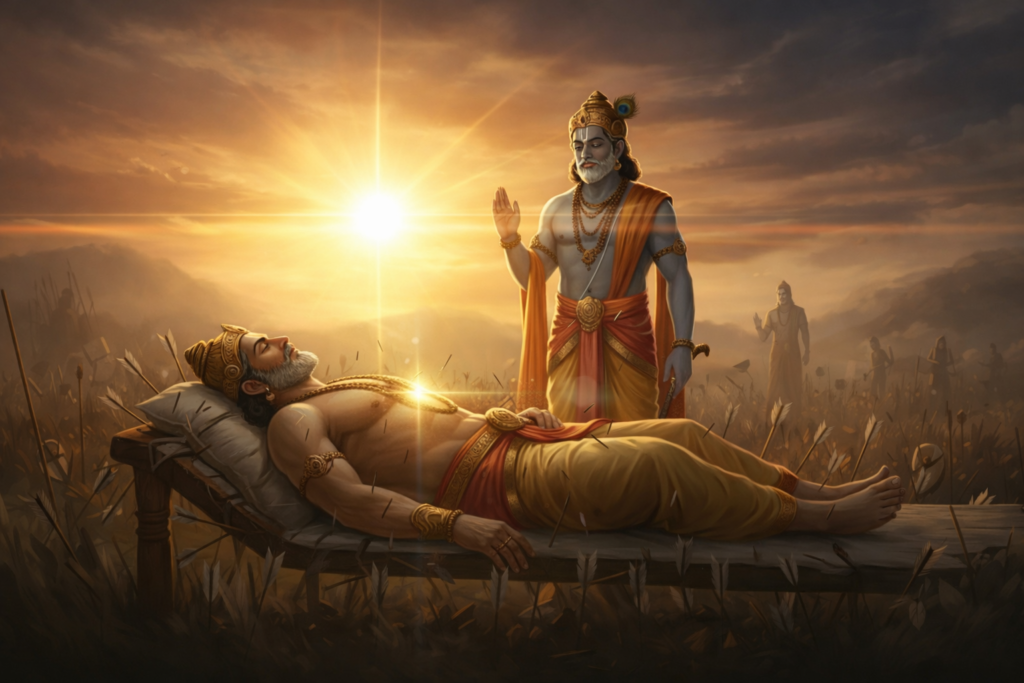
महाभारत काल में भीष्म पितामह ने इसी सिद्धांत का पालन किया था। युद्ध में अर्जुन के बाणों से घायल होने के बाद भी, इच्छामृत्यु के वरदान के कारण, वे बाणशैया पर तब तक रहे जब तक सूर्य उत्तरायण नहीं हुआ। उत्तरायण के प्रारंभ में ही उन्होंने भगवान श्रीकृष्ण को प्रणाम करते हुए अपने प्राणों का त्याग किया।
महत्व
धार्मिक दृष्टि से उत्तरायण को अत्यंत शुभ माना गया है और इसे देवताओं का दिन कहा जाता है। इस अवधि में विवाह, मुंडन, गृहप्रवेश जैसे मांगलिक कार्य किए जाते हैं। वहीं दक्षिणायन को देवताओं की रात्रि माना जाता है और इस दौरान शुभ संस्कारों की अपेक्षाकृत मनाही होती है। हालाँकि, इस काल को भोग-विलास तथा इच्छापूर्ति के लिए उपयुक्त माना जाता है। इस समय की गई पूजा-साधना से रोग एवं शोक से मुक्ति मिलती है।
In Sanatan Dharma, the northward movement of the Sun (Uttarayan) is considered to be of special significance. According to the Hindu calendar, the Sun God remains in Uttarayan from January 14 to June 20. During this period, He transits from the constellation of Makar (Capricorn) to Mithun (Gemini). Meanwhile, from June 21 to January 13, the Sun God remains in Dakshinayan (the southward movement), during which He transits from Kark (Cancer) to Dhanu (Sagittarius). On January 14, the Sun enters Makar Rashi, while on June 21, He enters Mithun Rashi.
Religious scriptures highlight the importance of both Uttarayan and Dakshinayan. It is believed that during the period of Dakshinayan, worship, chanting, and penance yield special merits, and performing spiritual practices during this time helps remove mental impurities. Lord Shri Krishna has elucidated its importance in the Bhagavad Gita.
Related Narrative
In the Bhagavad Gita, Lord Shri Krishna tells Arjuna – O Arjuna! A yogi who leaves the body during the bright fortnight (Shukla Paksha), during the daytime, and when the Sun is in Uttarayan, attains Brahman and does not return to this mortal world. However, one who leaves the body during the dark fortnight (Krishna Paksha), at night, and when the Sun is in Dakshinayan, goes to the lunar sphere but must return to the mortal world.
In the Mahabharata era, Bhishma Pitamah followed this very principle. Although wounded by Arjuna’s arrows in the war, he remained on his bed of arrows due to his boon of voluntary death until the Sun entered Uttarayan. At the very beginning of Uttarayan, he paid obeisance to Lord Shri Krishna and relinquished his life.
Significance
From a religious perspective, Uttarayan is considered extremely auspicious and is referred to as the day of the gods. Auspicious ceremonies like weddings, mundan (first hair-shaving), and housewarming are performed during this period. On the other hand, Dakshinayan is considered the night of the gods, and there is a relative prohibition on performing auspicious rituals during this time. However, this period is considered suitable for material enjoyments and fulfillment of desires. Worship and spiritual practices performed during this time help liberate one from disease and sorrow.